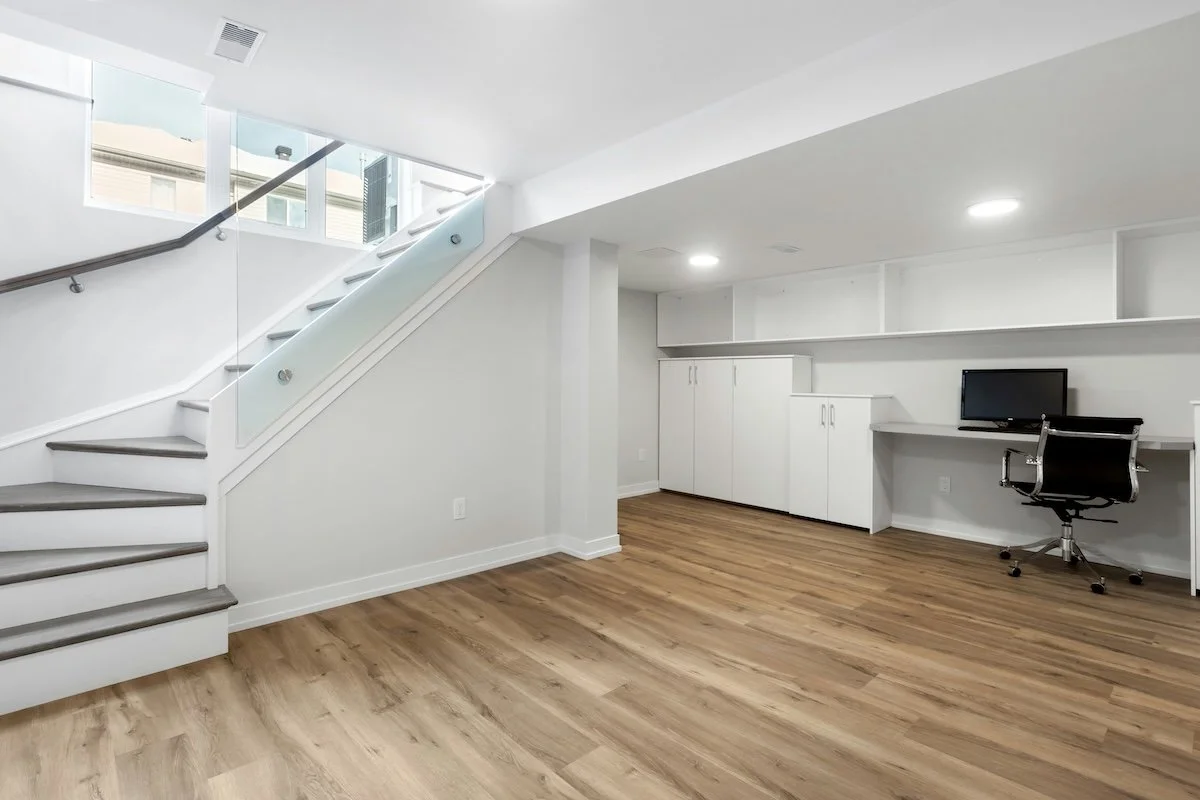
Radon is a naturally occurring radioactive gas that forms as uranium breaks down in soil and rock. It rises through the ground and enters homes through cracks and openings in the foundation, which makes basements a common entry point.
So, if you’re planning to finish your basement or have recently completed the project, you may be wondering how the renovation might impact your radon levels. In this guide, we explain how the impact on radon risk has less to do with a basement remodel specifically and more to do with home renovations in general.
Radon in Finished vs. Unfinished Basements
Because radon can seep through cracks and openings in your home’s foundation, unfinished basements tend to be more susceptible to radon gas, especially if you live in a high-potential zone like Middle Tennessee. Unfinished basements often have an exposed slab or an open sump pit, giving radon an easy entry point.
Finished basements, on the other hand, seal many of these points. However, that doesn’t mean a finished basement isn’t also vulnerable to radon. Putting up drywall or adding hardwood flooring doesn’t create an airtight barrier that prevents radon gas from entering your home, and finishing materials can hide cracks in the slab that still allow radon to enter. To reliably reduce radon levels in any basement, you need a professionally installed radon mitigation system.
Does Finishing a Basement Reduce Radon?
Finishing a basement doesn’t automatically reduce your radon levels. In fact, it could increase your levels, which is a risk with any major home renovation.
How Home Renovations Can Impact Radon Levels
Large renovations, like finishing a basement, can change the air pressure and airflow inside your home, both of which affect radon entry. Common examples include adding HVAC return vents in the basement, which can pull soil gas inside, and installing exhaust fans in a new bathroom or laundry area. Cutting into the slab for new plumbing also creates fresh openings for radon. Any of these changes can push your levels higher, even if your home test was low in the past.
That’s why we recommend testing your home for radon before and after any renovation. Testing first gives you a baseline and a chance to plan mitigation into the project. Testing afterward shows whether the finished space changed anything. If a test reveals high radon levels at or above the EPA’s action level of 4.0 pCi/L, it’s time to fix your home.
For ongoing peace of mind, a continuous radon monitor tracks your home’s levels year-round, so you can see how they shift with the seasons and after changes to the house. Check out the monitors we trust for recommendations.
Why Radon Mitigation Is Important in Finished Basements
Radon mitigation is important in any basement because radon gas doesn’t always stay in the lower levels of your home. It can drift into the rest of the house through stairwells and ductwork.
However, mitigation becomes even more important in a finished basement because your family will spend a lot of time down there. Once a basement becomes a bedroom, home office, playroom, or den, people breathe that air for hours each day instead of passing through to grab something from storage. That added exposure matters. According to the EPA, radon is second only to smoking as a cause of lung cancer in the U.S.
The EPA recommends placing radon tests in the lowest lived-in level of your home. If you have an unfinished basement you don’t use, then you would place the test on the first floor. But once you finish the basement and begin spending time down there, it becomes the lowest lived-in level. Because radon concentrations tend to be greater closer to the soil, a first-floor result may underestimate what your family now breathes in the basement. That’s another reason to retest once the project wraps up.
When to Start Radon Mitigation in a Finished Basement
Ideally, radon mitigation starts during the renovation, before the walls close up. When we’re brought in during the framing stage, we can design a system that fits seamlessly with your remodel and isn’t visible in the living space.
Most homes with a finished basement use a sub-slab depressurization system. We create a suction point through the slab and connect it to a vent pipe and fan that pull radon from beneath the foundation and release it above the roofline. During a renovation, our team can tuck the suction point into a utility room or under the stairs and run the pipe inside a framed wall or closet. We can also seal slab cracks and install an airtight sump cover before the flooring goes down. The fan sits in the attic or outside the home, so it stays out of your new living space.
Installing Radon Mitigation in Finished Basement Spaces After a Remodel
If your basement is already finished, you don’t have to tear out walls to fix a radon problem. Installing a radon mitigation system in a finished space takes more planning, but it’s still very doable.
Whether we install during the remodel or afterward, every radon mitigation project we take on is designed to protect your air quality without taking over the room you just built. Once the system is installed, we recommend retesting within 30 days to confirm it’s working, then testing again every two years.
Protect Your Home With The Radon Guys
Whether you're planning to finish your basement or already living in one that's never been tested, The Radon Guys can test your space and design a mitigation system that fits seamlessly into your finished basement. Reach out today to protect your investment and your family's air quality.