The History of Radon: From Deadly Mines to Modern Awareness
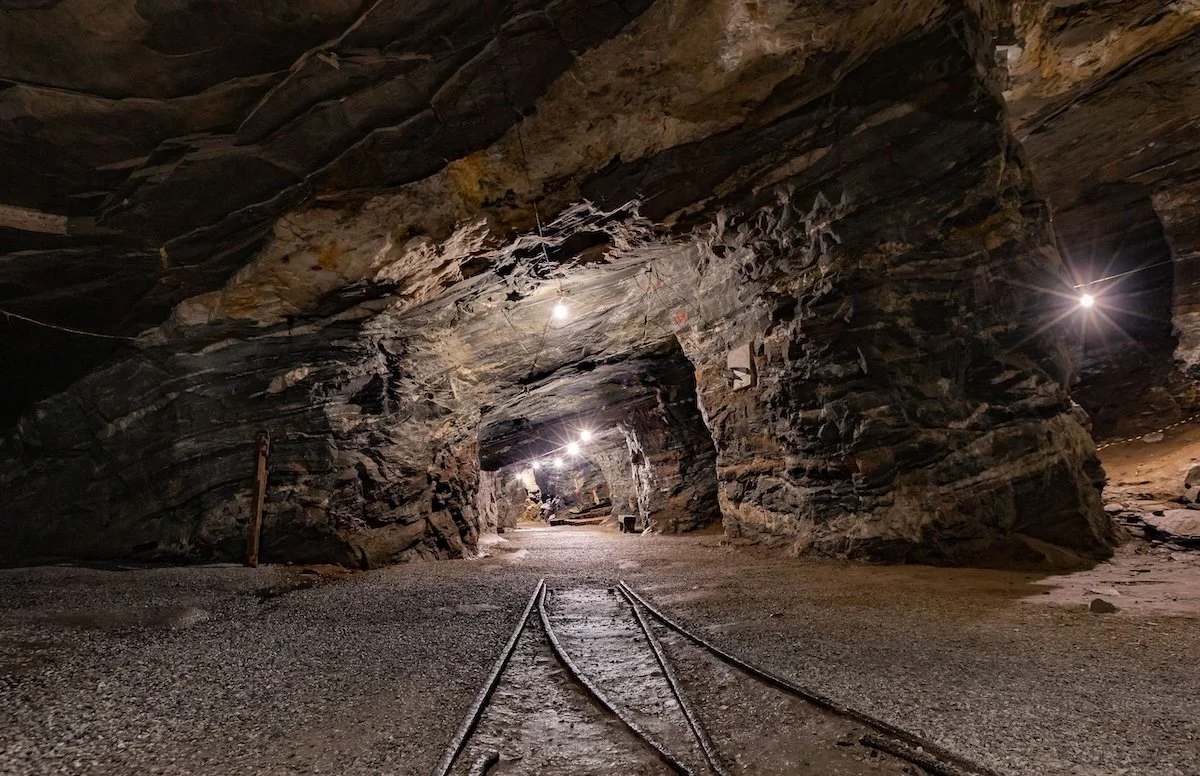
Radon is the second leading cause of lung cancer in the United States, responsible for an estimated 21,000 deaths each year, according to the U.S. Environmental Protection Agency. Yet for most of human history, no one knew it existed, let alone that it was slowly killing people. In fact, it wasn’t until centuries of “mystery” illness in the Schneeberg Mines in Germany and other mines in the region that we began to identify and understand the harm of radon exposure.
In this post, we cover the history of radon gas exposure, why the Schneeberg mines matter, and what those early cases of radon exposure mean for homeowners today.
Where Were the Schneeberg Mines?
Schneeberg is a small town in the Erzgebirge — the "Ore Mountains" — a region that straddles what is now eastern Germany and the Czech Republic. Mining activity here dates back to the Middle Ages, when the area yielded rich deposits of silver, cobalt, nickel, bismuth, tungsten, and uranium.
"Schneeberg Lung Disease" and Its True Cause
Miners who worked the tunnels had a disturbing tendency to die young, and they died of a mysterious wasting lung disease they called Bergsucht, or “miner’s disease.” It was first written about in the early 16th century, and as mining activity grew through the 17th and 18th centuries, so did the number of sick and dying workers. The disease became so common in the region that it earned its own name: “Schneeberg Lung Disease.”
For a long time, no one could explain it. Doctors ruled out common illnesses like tuberculosis, but the real cause remained a mystery for hundreds of years. It wasn’t until the 19th and 20th centuries that researchers confirmed what was actually happening: miners were dying of lung cancer linked to high exposure to radon and its short-lived radioactive decay products.
Why the Schneeberg Mines Were So Deadly
To understand why the Schneeberg mines were so lethal, it helps to understand how radon forms and behaves. Radon is produced through the natural radioactive decay of uranium and radium found in rock and soil. As a gas, it seeps through cracks and fissures and rises toward the surface. Outdoors, it rapidly disperses and dilutes to harmless concentrations. Underground (and inside buildings), it accumulates.
In the poorly ventilated tunnels of Schneeberg, several dangerous conditions combined to create a worst-case exposure environment:
Uranium-bearing rock continuously released radon gas into the mine air.
With limited ventilation, radon levels became extremely high.
Radon decayed rapidly into short-lived radioactive daughter products.
These decay products attached to dust and aerosol particles in the mine air.
Miners inhaled those particles, which lodged in the airways and emitted alpha radiation directly into lung tissue.
Radon gas itself isn’t the biggest health risk. It’s the short-lived decay products that attach to airborne particles and deliver radiation directly to the lung tissue, which is why dusty, poorly ventilated mines were so dangerous.
Schneeberg and the Radon-Lung Cancer Link
The Schneeberg mines became one of the most important case studies in the history of radon exposure because the numbers were so striking. Miners here were dying of lung cancer at rates far higher than the general population, and researchers started taking notice.
In 1879, Friedrich Hugo Härting and Walther Hesse documented lung cancer among miners in the region. Over time, scientists measured radon levels in the mines and studied the lung tissue of miners who had died, which helped move the explanation away from a vague mystery illness toward a clear, identifiable cause.
The broader science of radioactivity developed after physicians had already identified Schneeberg miners’ disease as lung cancer in 1879. In 1900, German physicist Friedrich Ernst Dorn observed that radium emitted a radioactive gas, then known as radium emanation and later called radon. Later research connected the extreme mine exposures to radon and its short-lived radioactive decay products, which can deliver damaging alpha radiation to lung tissue.
Why Schneeberg Matters Today
The Schneeberg mines were an early warning sign of an issue that would become a much larger public health concern. What researchers learned from those miners eventually shaped how we understand radon risk everywhere, including in our own homes. The mines created extreme conditions and exposures, but the same gas can accumulate in houses, apartments, schools, and workplaces, especially in lower levels and poorly ventilated spaces.
Today’s radon mitigation approach comes from the same basic principle learned in places like Schneeberg. We measure radon levels through testing, then improve ventilation or depressurization to send radon outside and reduce inhalation exposure.
Protect Your Home From Radon
The danger of radon exposure became clear through tragic mining history, but today, it’s a risk you can actively manage. Testing your home is the only way to know your radon levels, and mitigation systems can significantly reduce exposure. If you’re ready to take the next step, contact our team to schedule a radon test or learn more about effective mitigation solutions.